Inteligencia autocontenida · Microcircuitos corticalesSelf-contained intelligence · Cortical microcircuits

Oscar Chang, Ph.D. Investigador independiente en inteligencia artificial e ingeniería de microcircuitos corticales Independent researcher in artificial intelligence and cortical microcircuit engineering

¿Y si la inteligencia no creciera solo aprendiendo más, sino despertando áreas que ya existen? Mi trabajo explora cómo áreas corticales latentes, diseñadas en diálogo entre expertos humanos y modelos de lenguaje, resuelven lo que la arquitectura anterior no podía.

What if intelligence didn’t grow only by learning more, but by awakening areas that already exist? My work explores how dormant cortical areas, designed through dialogue between human experts and language models, solve what the previous architecture could not.

0 → 100 %0 → 100%nidos completados tras despertar N+4nests completed after awakening N+4
0gradientes: pesos fijos, sin entrenamientogradients: fixed weights, no training
1área cortical nuevanew cortical area

Marco conceptualConceptual framework

La Hipótesis del Despertar ProgresivoThe Progressive Awakening Hypothesis

Las nuevas áreas corticales funcionan como experimentos refutables: cada una se diseña para resolver un fallo concreto de la arquitectura previa, sin reemplazar a las anteriores. Así se abre un camino hacia la inteligencia general que crece celda a celda.

New cortical areas act as refutable experiments: each is designed to solve a specific failure of the previous architecture, without replacing what came before. This opens a path toward general intelligence that grows cell by cell.

Cada fracaso indica qué tarea darle a la próxima celda que despierte.Each failure tells us which task to give the next cell that wakes up.

  1. 1
    Fracaso observableObservable failureLa arquitectura cortical establecida falla en una tarea de largo horizonte (0 nidos en 300 intentos).The established cortical architecture fails a long-horizon task (0 nests in 300 attempts).
  2. 2
    Nueva tarea, co-diseñadaNew task, co-designedExpertos humanos y un LLM, bajo restricciones biológicas, encuentran la función mínima suficiente.Human experts and an LLM, under biological constraints, find the minimal sufficient function.
  3. 3
    Despierta un áreaAn area awakensUn área latente asume la función. Las demás siguen igual y la tarea se resuelve.A dormant area takes on the function. The others remain unchanged and the task is solved.

Líneas de investigaciónResearch lines

Del microcircuito al agenteFrom microcircuit to agent

01

Microcircuitos corticales e inteligencia autocontenidaCortical microcircuits and self-contained intelligence

Asignación funcional en microcircuitos corticales como ruta hacia una inteligencia autocontenida que trasciende el aprendizaje local. Con co-diseño humano–LLM, la histéresis de amenaza en un área añadida resuelve al 100 % tareas de supervivencia de largo horizonte, con pesos fijos y sin descenso de gradiente.

Functional allocation in cortical microcircuits as a route to self-contained intelligence beyond local learning. Through human–LLM co-design, threat hysteresis in an added area solves long-horizon survival tasks at 100%, with fixed weights and no gradient descent.

02

Hipótesis del Despertar ProgresivoProgressive Awakening Hypothesis

Un marco conceptual en el que las nuevas áreas corticales son experimentos refutables que resuelven los fallos de arquitecturas previas, abriendo nuevos caminos hacia la Inteligencia Artificial General (AGI).

A conceptual framework in which new cortical areas are refutable experiments that resolve the failures of previous architectures, opening new paths toward Artificial General Intelligence (AGI).

03

Agentes de autoaprendizaje y robóticaSelf-learning agents and robotics

Agentes autónomos que aprenden a resolver problemas complejos con redes neuronales profundas y aprendizaje por refuerzo: desde la locomoción biomecánica y el equilibrio energético en robots virtuales multicuerpo hasta la simulación del plegamiento de proteínas durante infecciones virales.

Autonomous agents that learn to solve complex problems with deep neural networks and reinforcement learning: from biomechanical locomotion and energy balance in virtual multibody robots to simulating protein folding during viral infections.

PublicacionesPublications

Publicaciones seleccionadasSelected publications

  • En rev.In rev.

    Awakening Cortical Areas via Human–LLM Co-Design: A Paradigm for Embodied Intelligence Beyond Local Learning

    O. Chang, J. Pérez

    En revisión por pares.Under peer review.

  • 2025

    Holographic Memory and Cortical Microcircuits: A Step Towards AGI

    O. Chang, J. Pérez, A. Meneses

    Artificial General Intelligence: 18th International Conference, AGI 2025. Lecture Notes in Computer Science, pp. 72–83. Springer Nature.

    doi:10.1007/978-3-032-00686-8_8

  • 2023

    gRNA Design: How Its Evolution Impacted on CRISPR/Cas9 Systems Refinement

    C. Motoche-Monar, J. E. Ordoñez, O. Chang, F. A. Gonzales-Zubiate

    Biomolecules, 13(12), 1698. MDPI.

    doi:10.3390/biom13121698

  • 2023

    Sentiment Analysis of Russia-Ukraine Conflict Tweets Using RoBERTa

    L. Ramos, O. Chang

    Uniciencia, 37(1), 1–11.

    doi:10.15359/ru.37-1.23

  • 2020

    Forecasting the Consumer Price Index (CPI) of Ecuador: A Comparative Study of Predictive Models

    J. Riofrío, O. Chang, E. J. Revelo-Fuelagán, D. H. Peluffo-Ordóñez

    International Journal on Advanced Science, Engineering and Information Technology (IJASEIT), 10(3).

    doi:10.18517/ijaseit.10.3.10813

  • 2010

    A Robotic Eye Controller Based on Cooperative Neural Agents

    O. Chang, P. Campoy, C. Martínez, M. A. Olivares-Méndez

    International Joint Conference on Neural Networks (IJCNN 2010), pp. 1–6. IEEE.

    doi:10.1109/IJCNN.2010.5596985

Lista completa enFull list on Google Scholar · ORCID · Academia.edu

Oscar Chang

Acerca deAbout

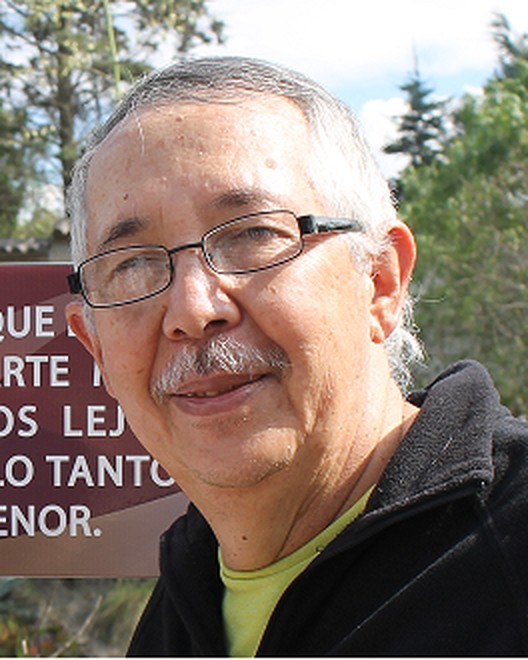
Oscar Chang, Ph.D.

Oscar Chang es Doctor en Ingeniería Eléctrica por la Universidad Estatal de Pensilvania (Penn State University). A lo largo de su carrera ha desarrollado labores académicas y de investigación en diversas universidades de Sudamérica y España, y colabora activamente con la Universidad Central de Venezuela (UCV), la Universidad Simón Bolívar (USB) y Yachay Tech University.

Oscar Chang holds a Ph.D. in Electrical Engineering from The Pennsylvania State University (Penn State). Throughout his career he has carried out academic and research work at universities in South America and Spain, and he currently maintains active collaborations with Universidad Central de Venezuela (UCV), Universidad Simón Bolívar (USB) and Yachay Tech University.

Hoy trabaja como investigador independiente desde Caracas, en la frontera entre la neurociencia computacional y la inteligencia artificial: arquitecturas de microcircuitos corticales, agentes autónomos y co-diseño con modelos de lenguaje.

Today he works as an independent researcher in Caracas, at the frontier between computational neuroscience and artificial intelligence: cortical microcircuit architectures, autonomous agents and co-design with language models.

Perfil en Yachay TechYachay Tech profile ↗

Ph.D. · Penn State UniversityUniversidad Central de VenezuelaUniversidad Simón BolívarYachay Tech University
ContactoContact

Hablemos de investigaciónLet’s talk research

Colaboraciones, revisiones, charlas o preguntas sobre el Despertar Progresivo.

Collaborations, reviews, talks or questions about the Progressive Awakening.